

Mathematics
Mathematics
Mathematics in CPS
Vision: Nurturing confident and curious students who are independent and creative problem-solvers
Mission: To nurture future-ready students by developing their mastery in Mathematics through joy of learning
MOE Mathematics Framework
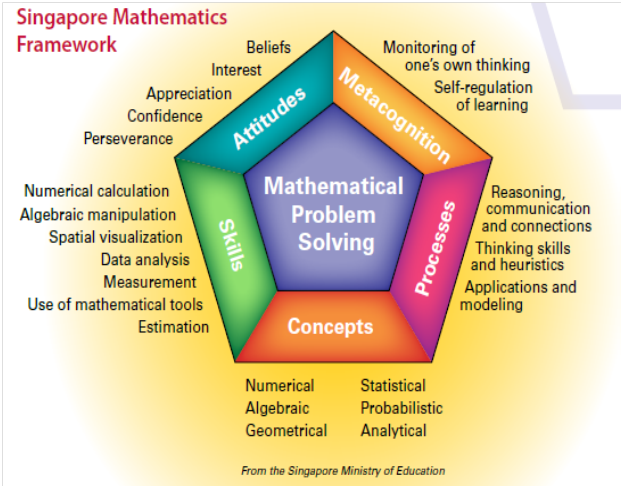
The Mathematics Framework has been the cornerstone of the Mathematics Curriculum. It involves the acquisition and application of Mathematics concepts and skills in a wide range of situations including non-routine, open-ended and real-world problems. The development of mathematical-problem-solving ability is dependent on five inter-related components, which are namely Concepts, Skills, Processes, Attitudes and Metacognition.
In Corporation Primary School, we seek to develop the five components in each of our students through our school-based curriculum. We want to engage our students with learning experiences, which promote authenticity and connect to real-life applications to stimulate the interest in their learning.
Our Key Highlights
2025 in Summary – Mathematics is Fun Activities
With the plethora of activities designed throughout the year to infuse joy in students’ learning of Mathematics, we hope that they will find the subject enjoyable and meaningful.
In addition to the engaging activities organised during Pre-Assembly sharing and lunch-time sessions, the department has also implemented several key approaches and programmes to further support and enhance students’ mathematical development.
1. Concrete-Pictorial-Abstract Approach (CPA) (P1 - P6)
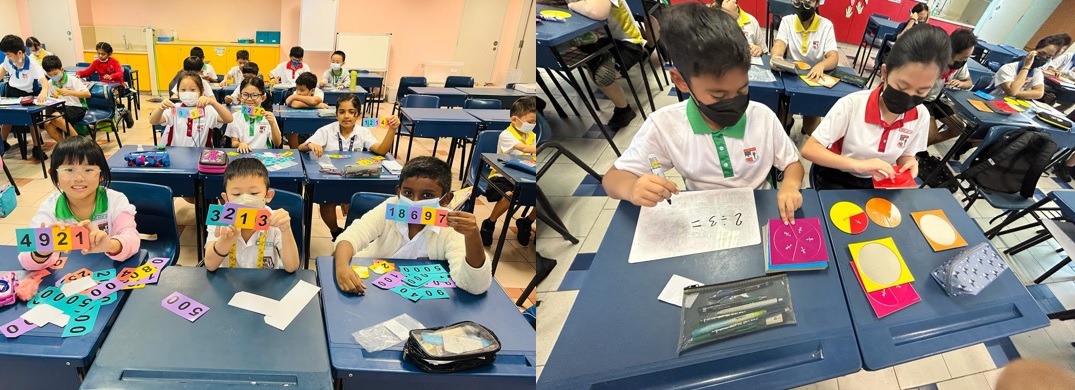
Our school adopts the Concrete-Pictorial-Abstract (C-P-A) approach which is a system of learning that uses physical and visual aids to build a child’s mathematical understanding of abstract topics. When learning a new mathematical concept or process, especially in the early stages, students use various manipulatives and visual aids to deepen their understanding and develop mastery of abstract topics.
2. Collaborative Inquiry Based Learning (P1 - P6)
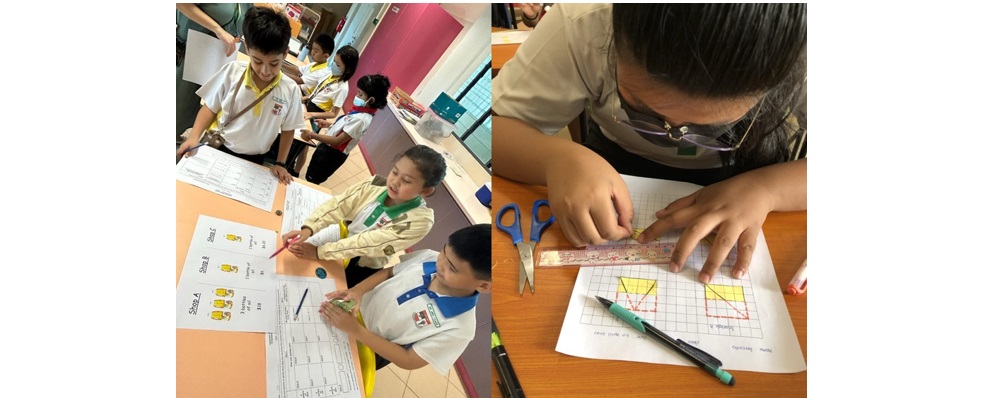
The department has been incorporating an inquiry-based learning package on a termly basis for the learning of Mathematics in the classroom since 2021. During this session, teachers present scenarios/ problems to students and engage them in a discussion. The teachers guide the students by asking scaffolded and in-depth questions and get them to present their thought processes collaboratively. While focusing on critical thinking skills, the students are also encouraged to voice their different solutions and views on the problems. These lessons will also help students deepen their concepts in selected topics and thus aid them in problem solving.
3. Math Journaling
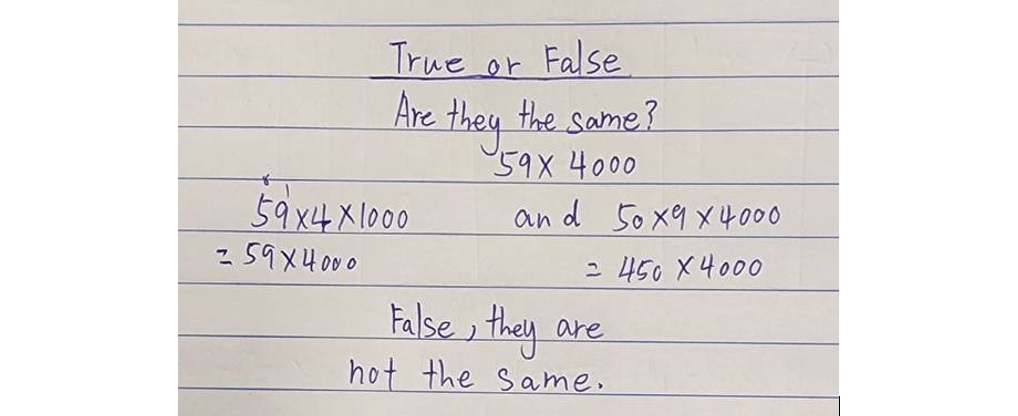
Mathematics Journal assists in assessing students’ thinking and promotes communication skills. It consolidates learning and allows students to reflect on learning in the classroom. Journals can mainly be investigative, affective and procedural in nature.
4. Infusion of Mathematics in Authentic Real-Life Context
-
Level Engagement Tasks (LET)
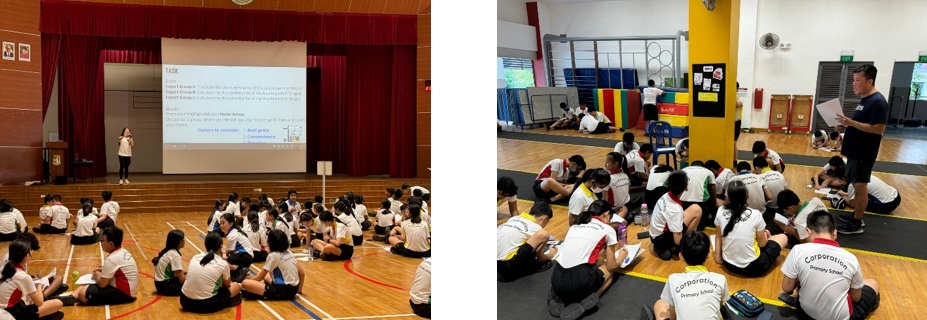
As part of our efforts to provide students with the opportunity to experience authentic learning tasks and to promote the joy of learning, Level Engagement Tasks are done at every level. The tasks allow students to develop a strong conceptual understanding of Mathematics as they experience the application of Mathematics in real-life contexts. In addition, the tasks are designed to stretch students’ adaptive thinking and critical thinking as they look for various solutions to solve the tasks.
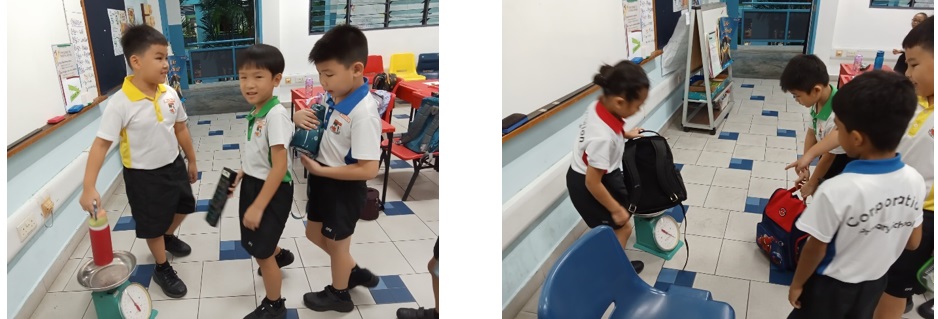
P2 LET on Mass
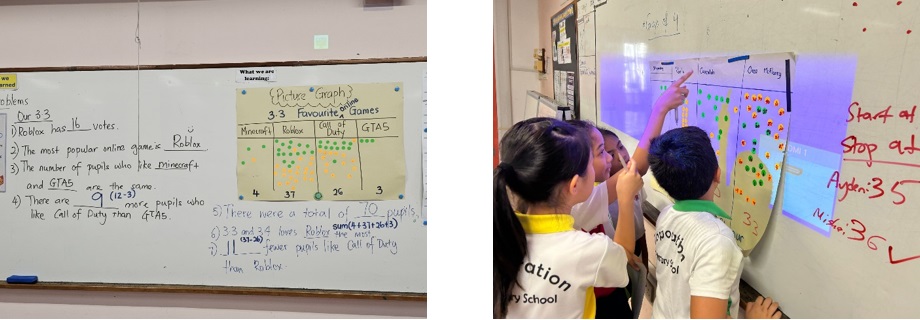
P3 LET on Bar Graphs
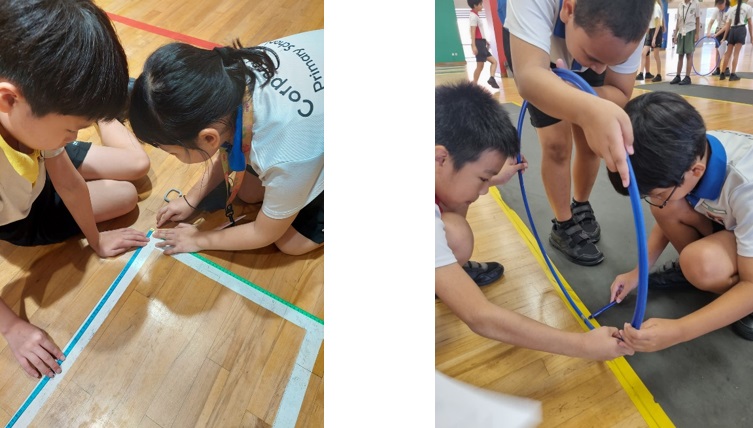
P4 LET on Area and Perimeter
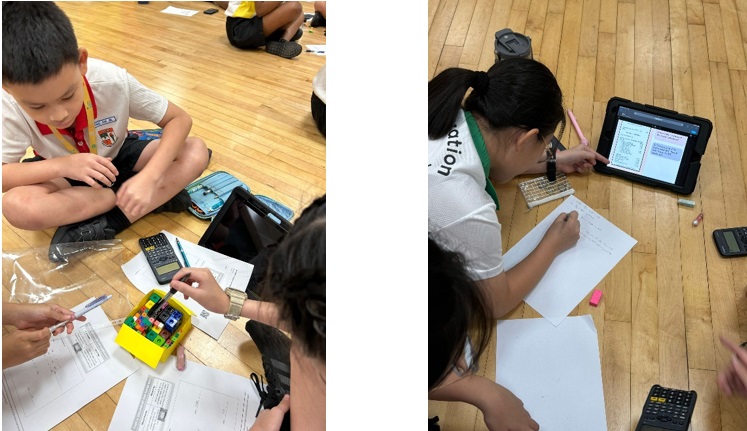
P5 LET on Volume, Percentage and Measurement
P6 LET on Percentage
-
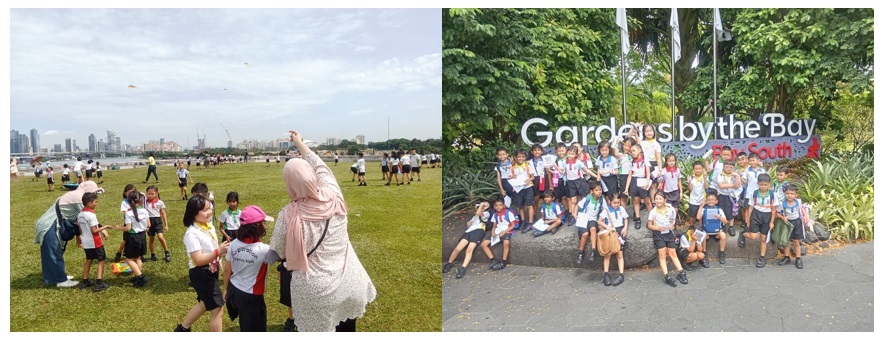
P1 Learning Journey to Marina Barrage and Gardens by the Bay
The P1 students visited Gardens by the Bay, where they learned to apply the concept of time by planning their own schedules for the outing. They concluded their learning journey with a kite-flying session at Marina Barrage. This experience provided them with an authentic opportunity to apply what they had learned in a real-life setting while also building teamwork among their peers.
-
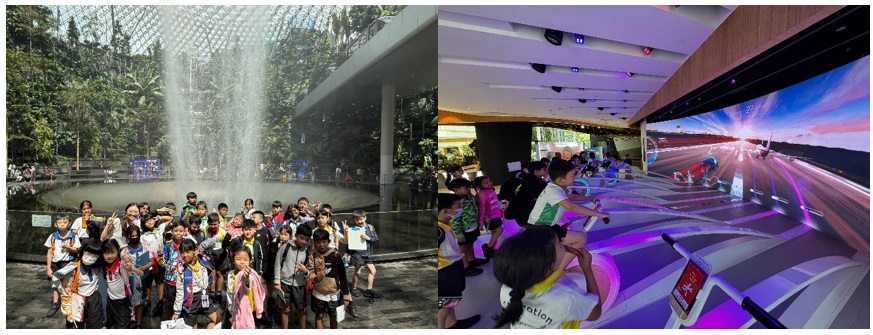
P2 Learning Journey to Changi Airport
In collaboration with other departments such as English and Social Studies, the P2 students visited Changi Airport. This experience allowed them to apply the concepts of money, time, and the measurement of length and mass in a real-world context. At the same time, it helped develop their occupational awareness, strengthened the connections to their STELLAR unit ‘Postcards to David’ and fostered their collaborative skills.
5. Heuristics Skills (P1 - P6)
Heuristics are problem solving strategies that students can adopt to solve routine and non-routine word problems. Students from all levels are taught a set of heuristic skills during their Mathematics lessons. They will also be exposed to a variety of problems that allow them to apply heuristics.
6. ICT – based Lesson (P1 - P6)
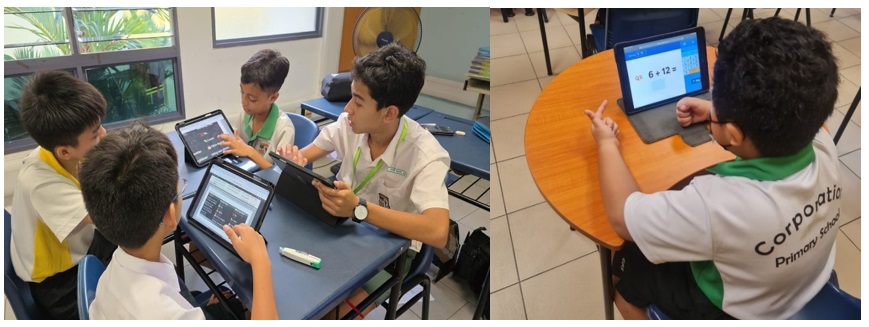
Students are given the opportunity to experience ICT in classroom lessons, taking ownership of their own learning. Teachers use various platforms to engage them in the learning of Mathematics such as Geogebra, Koobits and Student Learning Space (SLS).
Mathematics teachers work together regularly to craft out different lessons for the students on SLS. These SLS lessons are assigned as homework or used in class to complement the face-to-face lessons concurrently.
Our students are also encouraged to engage in independent learning at home via Koobits. Students can learn at their own pace by trying out various Mathematics questions. Teachers also use the Quiz function to assess students’ learning. There are also interesting Mathematics stories and games available to motivate students and make Mathematics learning more enjoyable.
7. Support Programmes:
-
Learning Support for Mathematics (LSM - P1 to P4)
Selected students are supported through the LSM Programme to deepen their understanding of Mathematics. This programme comprises customised, well-paced lessons that support the students in the learning of Mathematics in a small group setting.
-
ICAN Mathematics (Improving Confidence and Achievement in Numeracy)
The MOE ICAN Mathematics learning aims to improve the students’ confidence level in numeracy. This programme is for selected classes, and it provides students a systematic approach to learning Mathematics.
8. Stretch Programme
-
E2K Mathematics
P4 to P6 students who display an aptitude and potential for Mathematics are invited to participate in the E2K Mathematics Programme. This programme aims to develop and stretch higher-order thinking skills through a range of problem-solving problems. solving non-routine problems based on different mathematical topics that require students to exercise their critical and logical thinking skills.
-
Supporting students to participate in various Mathematics competitions
Selected students are also given the opportunity to participate in the following competitions to apply their knowledge and skills to stretch their mathematical thinking skills through solving routine and non-routine problems based on different mathematical topics that require them to exercise their critical and logical thinking skills.
-
Hwa Chong Institution (SMOPS)
-
Raffles Institution (RIPMWC)
-
River Valley Mathematics Challenge (RVMC)
-
NUS High (NMOS)
-
Annual Mathlympics
-
NUS High Math Challenge
-
Visual Spatial Competition
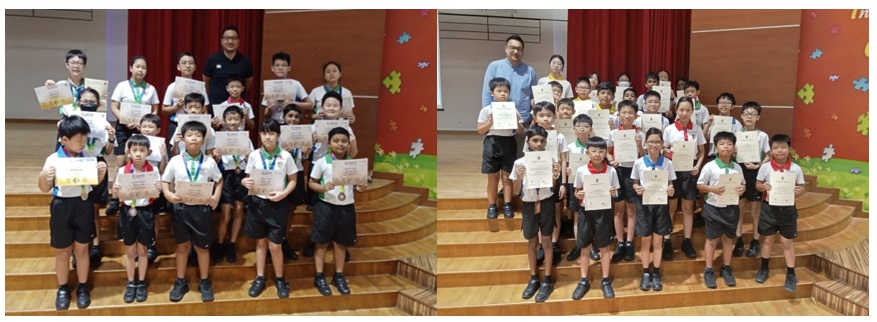
9. Mathematics Week (T2W10)
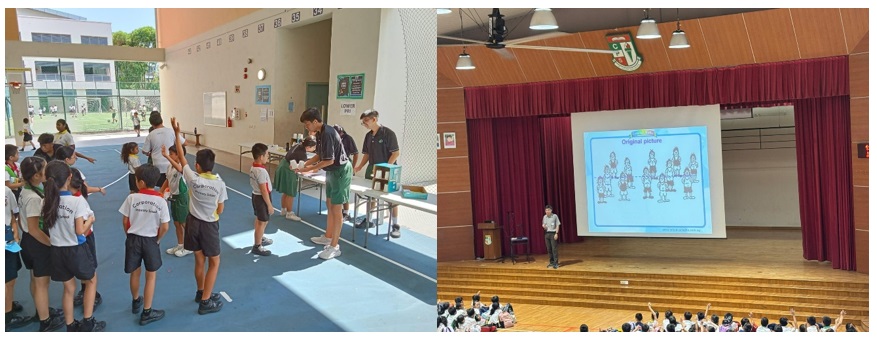
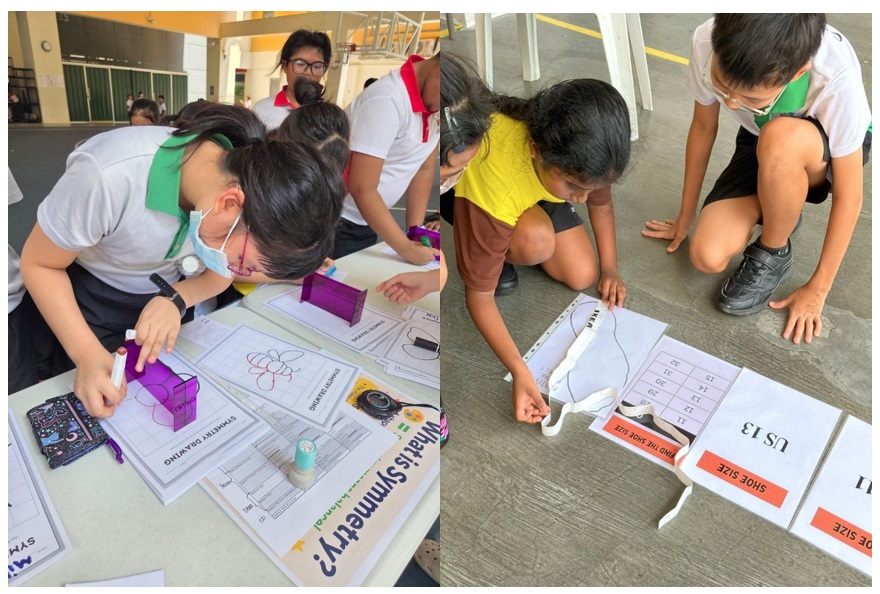
Our second Mathematics Week took place in Term 2 Week 10 this year. Through well-designed school-wide activities, the department strives to foster lifelong learning and appreciation of Mathematics in our students. Students participated in assembly programme – Math Magic Show, Math Movie Screening, lunch activities and booths activities set up in collaboration with students from ACS Barker and Jurongville Secondary Schools. Students experienced the joy of learning Mathematics beyond the syllabus and were empowered to engage in self-directed learning.
10. Enrichment Programmes
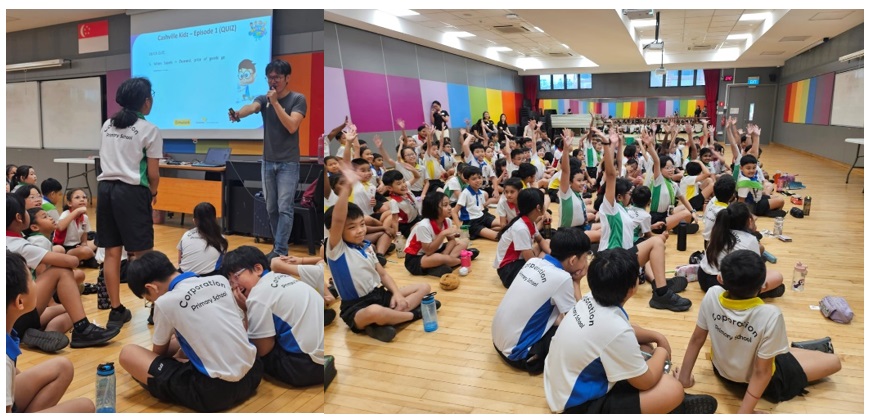
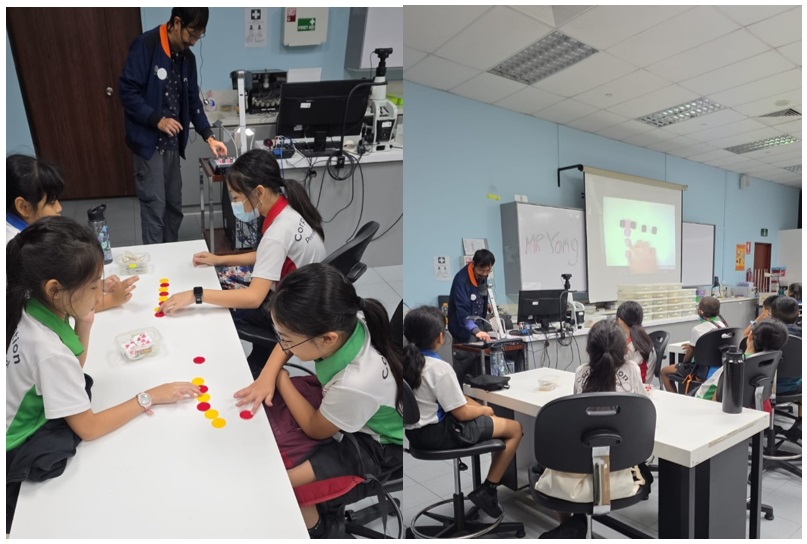
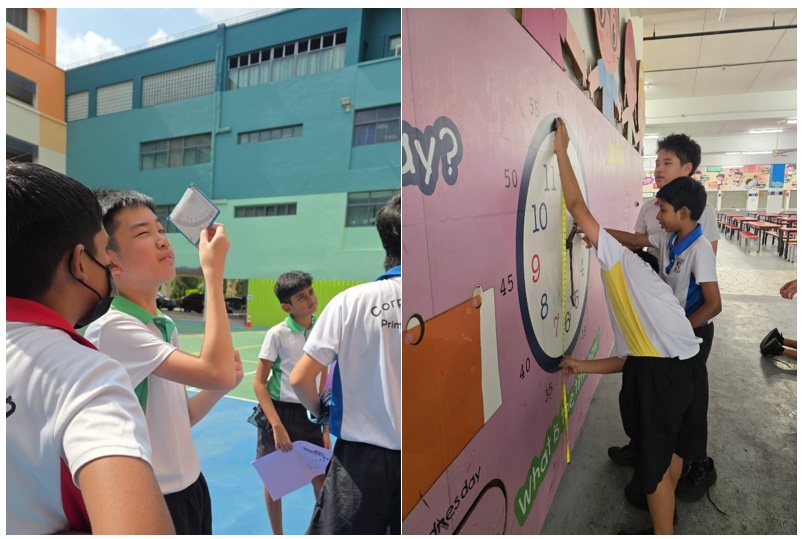
To make learning Mathematics more meaningful for our students, the department also worked with different stakeholders to conduct various mathematical workshops, infusing the mathematical topics that the students have learned into various hands-on activities for the students to apply their conceptual understanding.
-
P3 – Financial Literacy Workshop by Maybank
-
P4 – Maths Games and Problem-Solving Workshop at Singapore Science Centre
-
P5 – Spatial Visualisation Workshop
-
P6 – Math Learning Day
How can you support your child in the learning of Mathematics?
-
Work on their factual fluency (eg. Times table, division etc)
-
Daily exposure to Mathematics word problems (Practice 5 questions per day) and variety of questions
-
Encourage your child to complete his/her Mathematics homework diligently
-
Link learning Mathematics to real-life experiences at home (eg. discount coupons, newspapers, advertisements etc)
-
Monitor your child’s learning process at home
-
Use Koobits for self-study
-
Revise topics from previous years (Mathematics is spiral in nature and therefore there is a need to have a strong foundation.)
-
Discuss with your child’s Mathematics teacher on your child’s progress
-
Encourage your child to have a Growth Mindset (e.g Asking for help is never something to be afraid of, The Power of Yet, Overcoming the fear of failure)
-
Celebrate little success! Praise your child for their effort and small improvements in their learning.
For Parents’ Reference
-
MOE Mathematics syllabus:
-
SEAB List of Approved Calculators for PSLE: